Systems Thinking
Students learn to see the complete system behind a robot: input, processing, output, and where failure occurs. This trains them to break complex problems into manageable modules.

AI Robotics Club
Join a real AI robotics engineering team.
From robot construction to algorithms, testing, and competition, students learn how real robots work. This is not just a robotics class. It is a long-term engineering training program.
Main Introduction
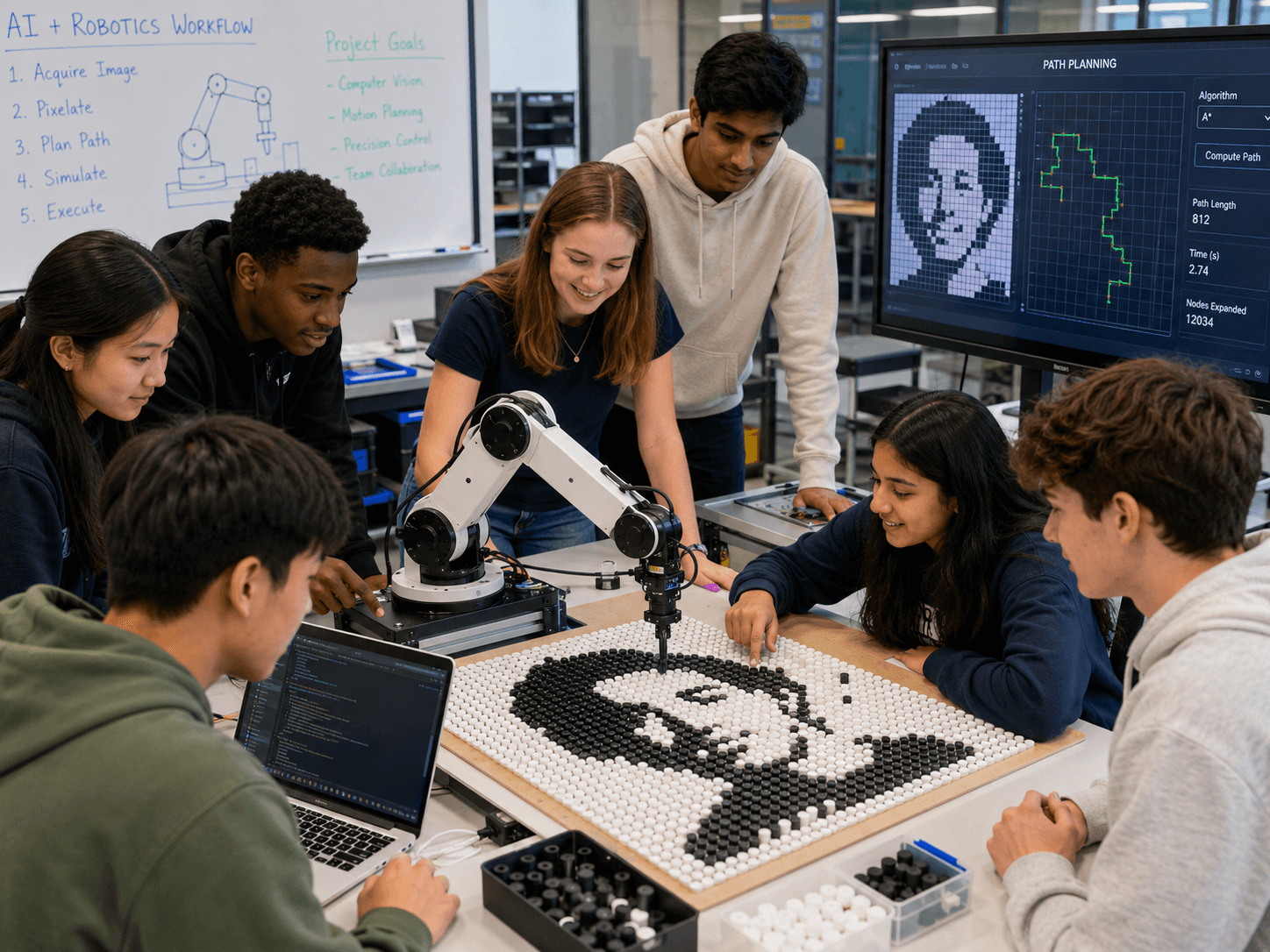
Many robotics classes simply teach students to follow instructions and assemble. At AI Robotics Club, we want students to truly understand how robots perceive the environment, what sensor data actually represents, how algorithms make decisions, why robots fail, and how testing and debugging lead to improvement.
Each week, students work through real engineering challenges. Starting from foundational robot construction, they gradually progress into sensor sampling, autonomous obstacle avoidance, path planning, algorithm testing, competition strategy, and project presentation.
By the end of the program, students will not only complete a robotics project. They will develop a transferable engineering mindset and long-term problem-solving abilities.
Student Growth & Skill Development
Using robotics to develop systems thinking, data literacy, and engineering creativity.
Students learn to see the complete system behind a robot: input, processing, output, and where failure occurs. This trains them to break complex problems into manageable modules.
Through sensor sampling, testing logs, and error analysis, students learn that robots do not act based on feelings. They act based on data.
Students learn how rules drive intelligent behavior, from obstacle avoidance to backup workflows, path planning, and automation thinking.
Robotics projects inevitably fail. Students learn how to locate problems, record observations, test hypotheses, and improve solutions.
Students take on roles across mechanical structure, programming, sensor testing, algorithm optimization, competition strategy, and project presentation.
Students learn to explain what problem they solved, how their robot works, what tests they performed, what failed, and how the system improved.
Featured Learning Topic
AI & Agents
AI Automation
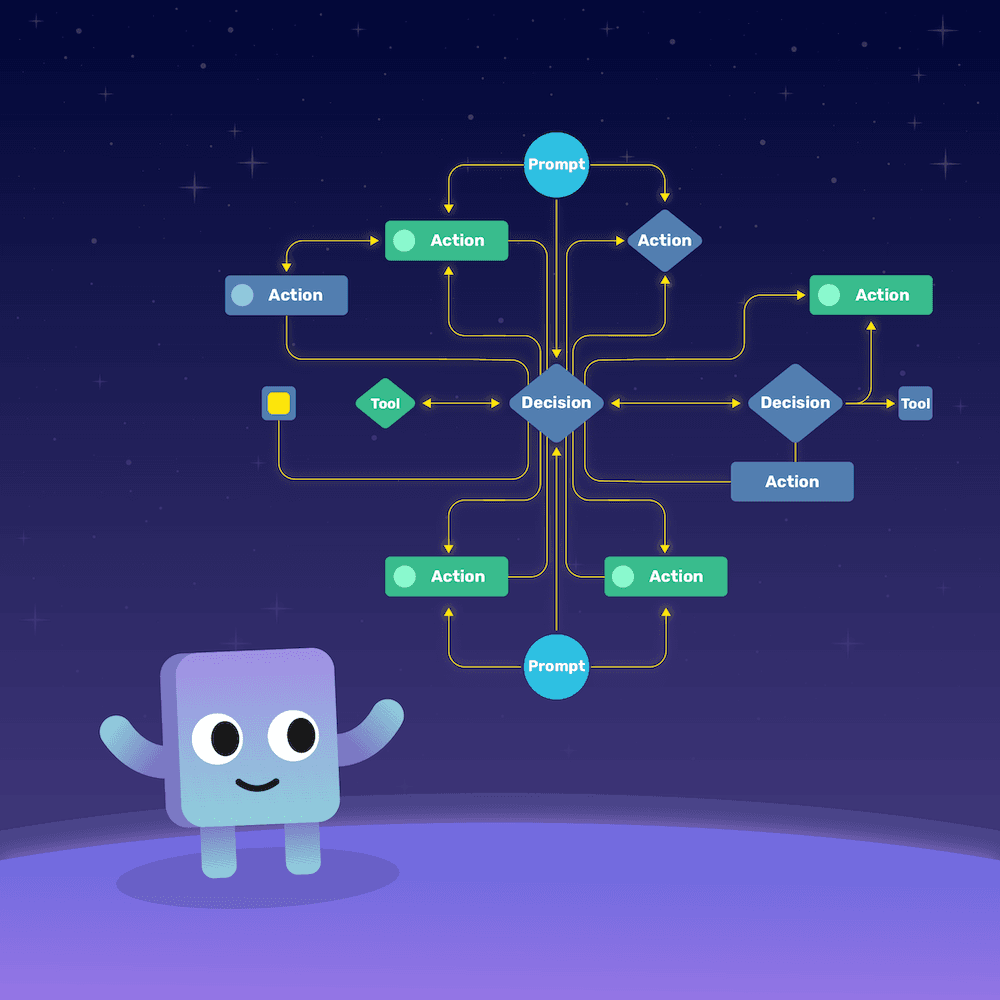
Learn how modern AI systems plan, reason, and complete complex tasks autonomously.
Students will explore how advanced AI agents break down goals into smaller steps, use tools, access information, and make decisions to accomplish real-world objectives.
Topics
Projects
Students will learn the same concepts used in cutting-edge AI companies to build intelligent systems capable of performing tasks with minimal human supervision. By the end of the program, students will be able to design and build AI agents that can think, plan, execute, and collaborate to solve complex problems.
AI Foundations
AI & LLM
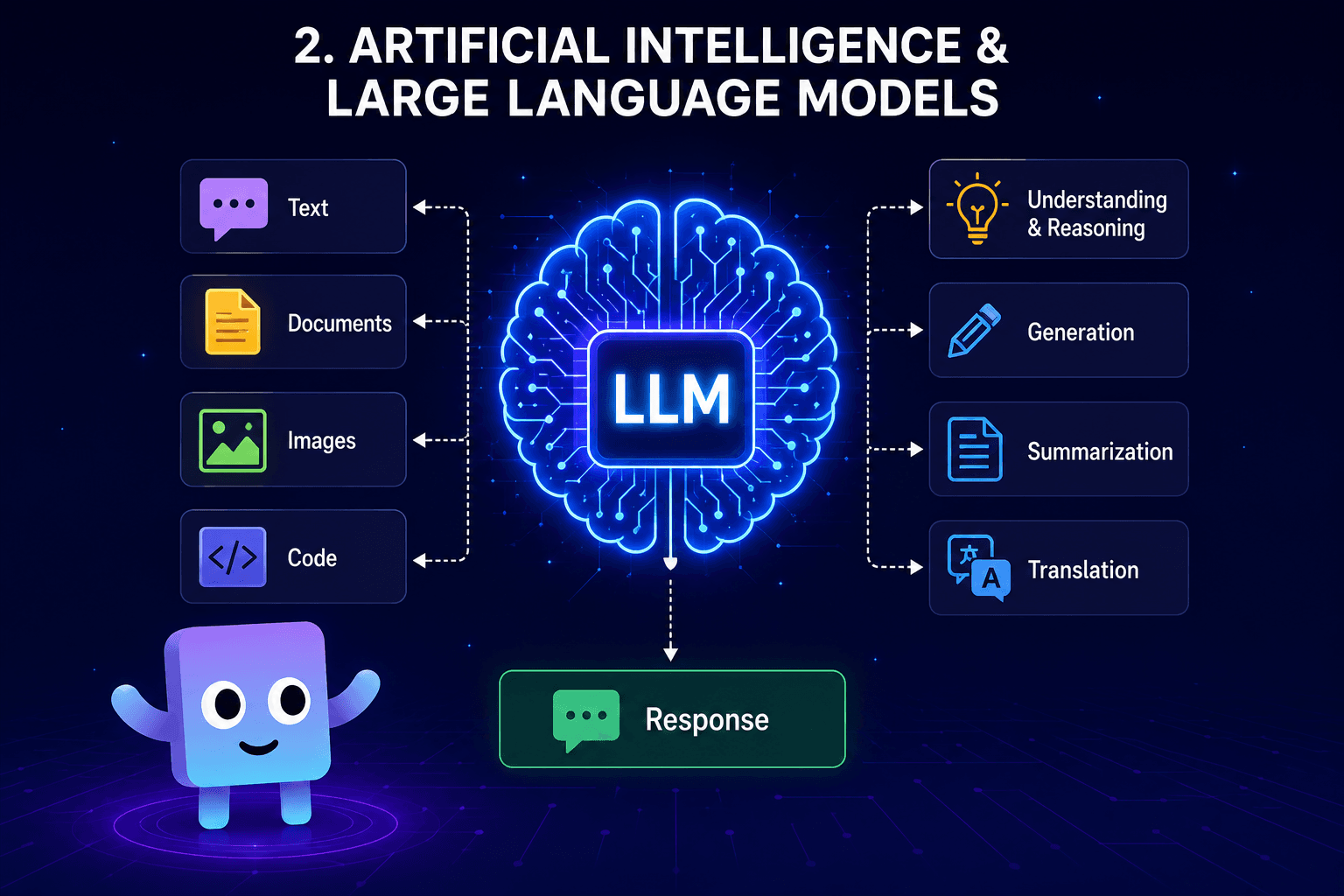
Explore the technology behind ChatGPT, Claude, Gemini, and the next generation of AI systems.
Students gain a deep understanding of how modern AI models process information, generate responses, solve problems, and assist humans across countless industries.
Topics
Projects
Students learn how to work alongside AI as creators rather than simply users.
Computer Vision
Visual AI
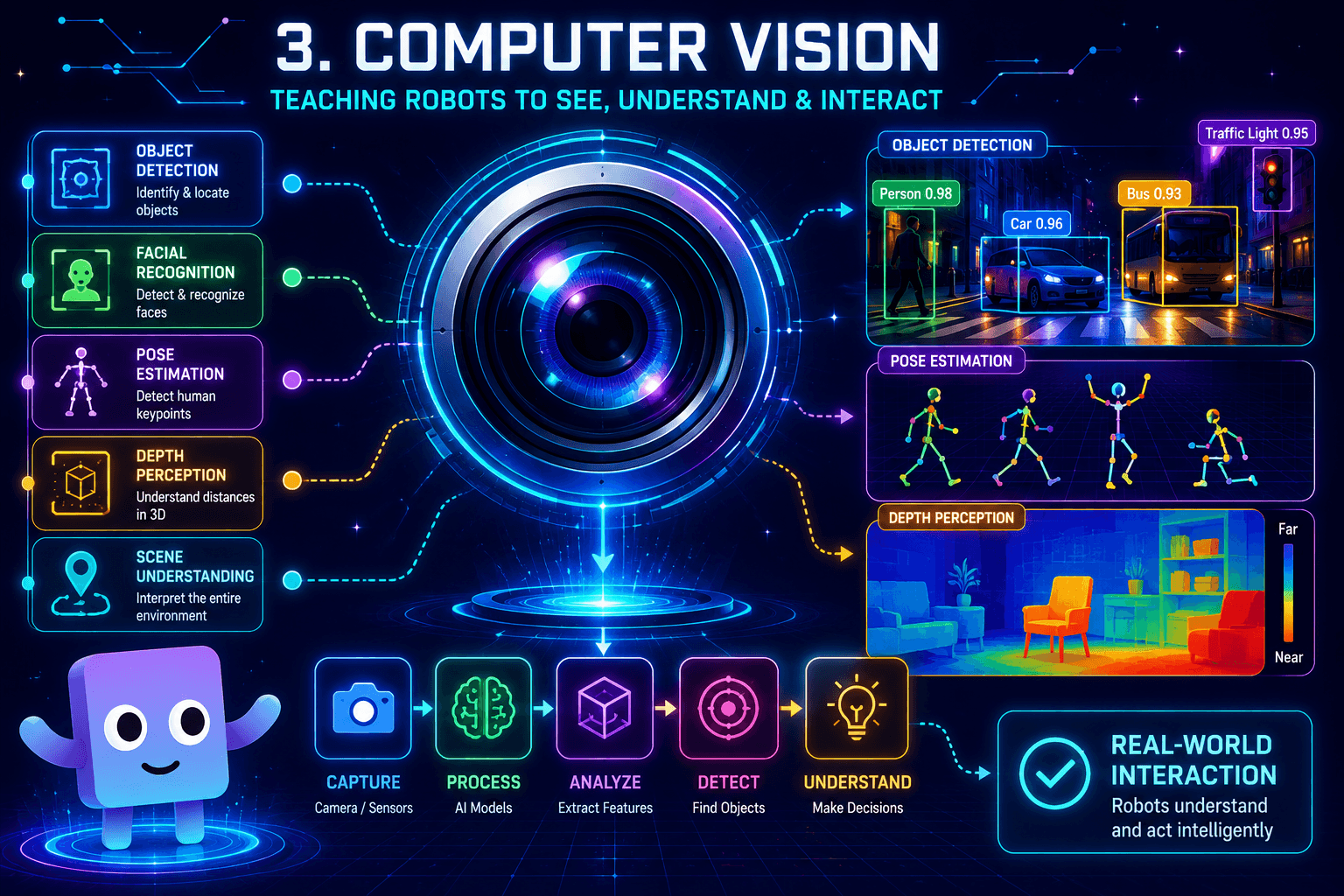
Teach computers and robots how to see, understand, and interact with the world.
Computer Vision powers self-driving cars, security systems, medical imaging, manufacturing robots, and next-generation intelligent machines.
Topics
Projects
Students develop systems that allow robots to perceive and understand their surroundings.
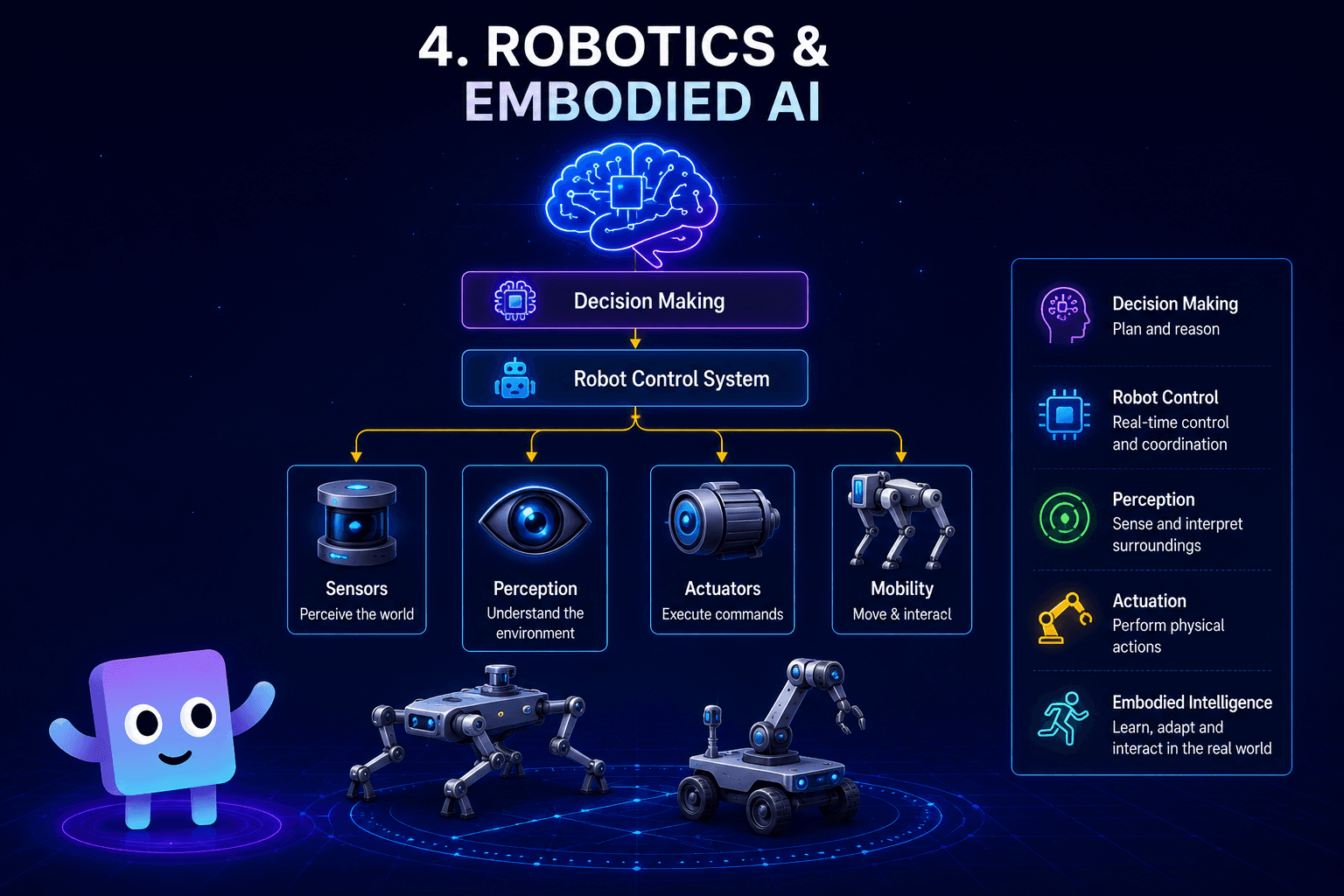
Robotics
Embodied Intelligence
Learn how intelligence moves from software into the physical world.
Students work directly with advanced robotic systems while learning how hardware, software, AI, and sensors work together.
Topics
Projects
Students gain hands-on experience with technologies used in research labs and industry.
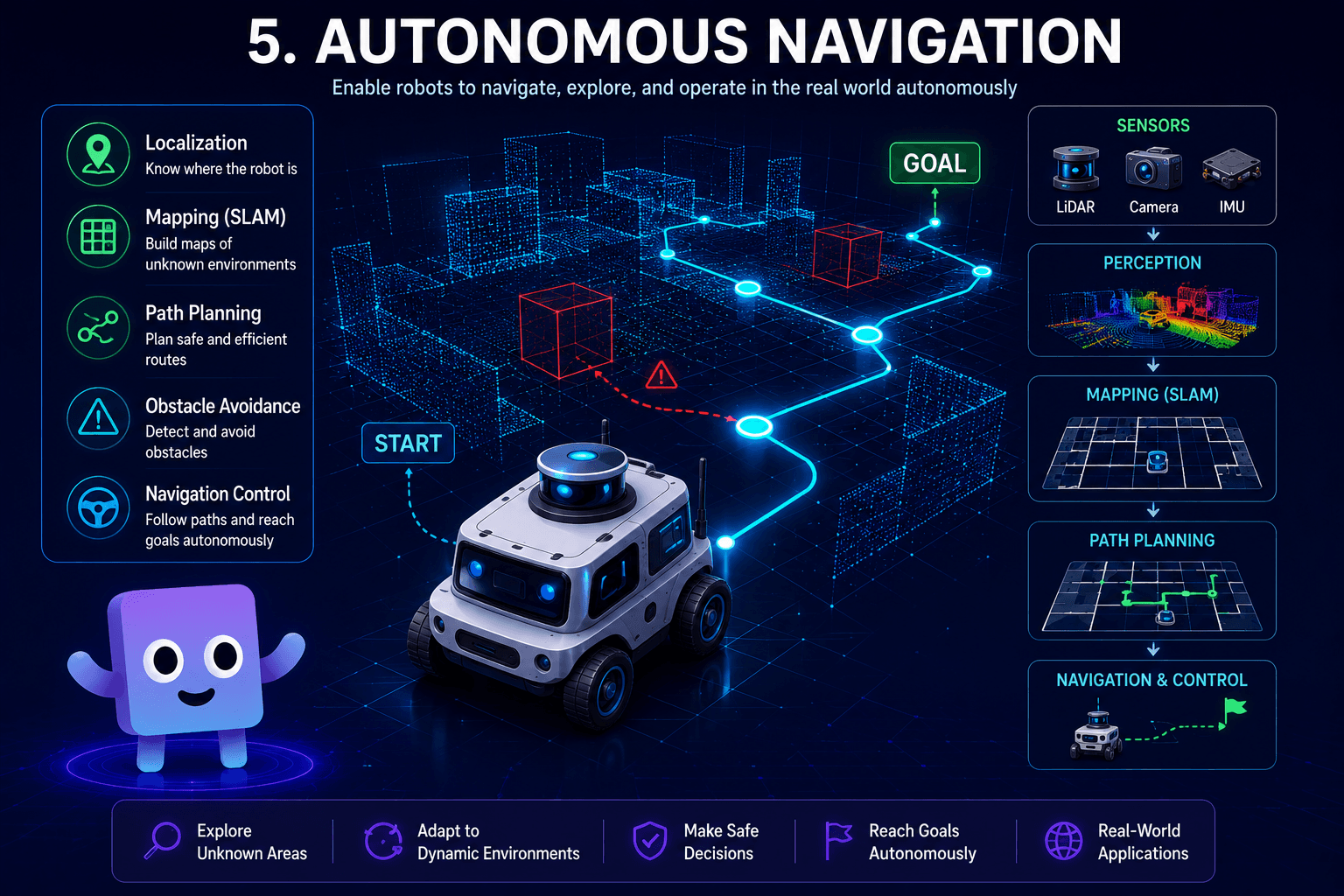
Robotics
Autonomous Movement
Discover how robots understand their environment and move independently.
Autonomous navigation is one of the core technologies behind self-driving vehicles, warehouse robots, delivery robots, and exploration systems.
Topics
Projects
Students learn how machines make decisions while moving through the real world.
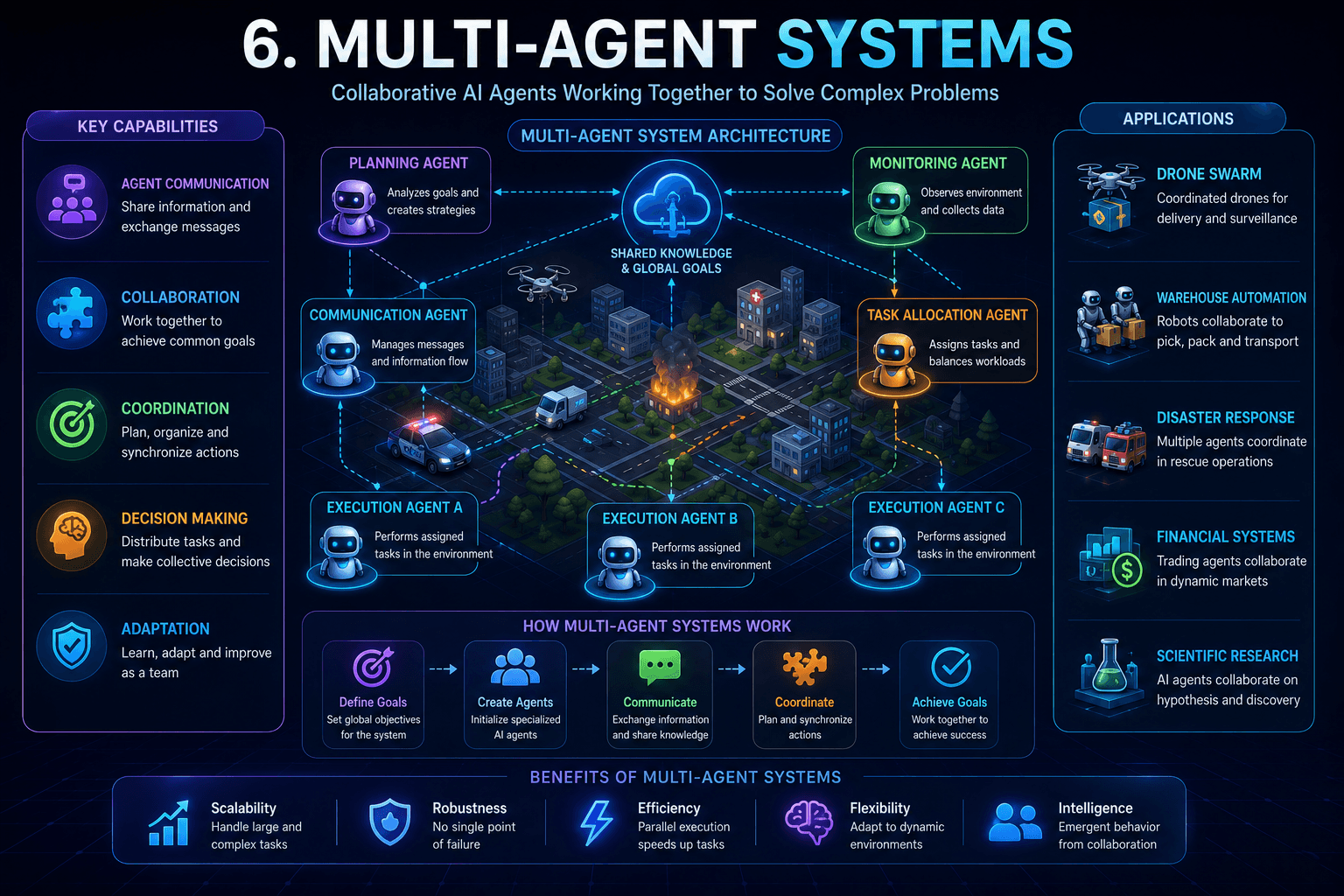
Multi-Agent Systems
Collaborative Intelligence
Learn how multiple robots and AI systems work together to solve problems larger than any individual system can handle.
Students explore the future of distributed intelligence and collaborative automation.
Topics
Projects
Students learn how future intelligent systems will coordinate and collaborate at scale.
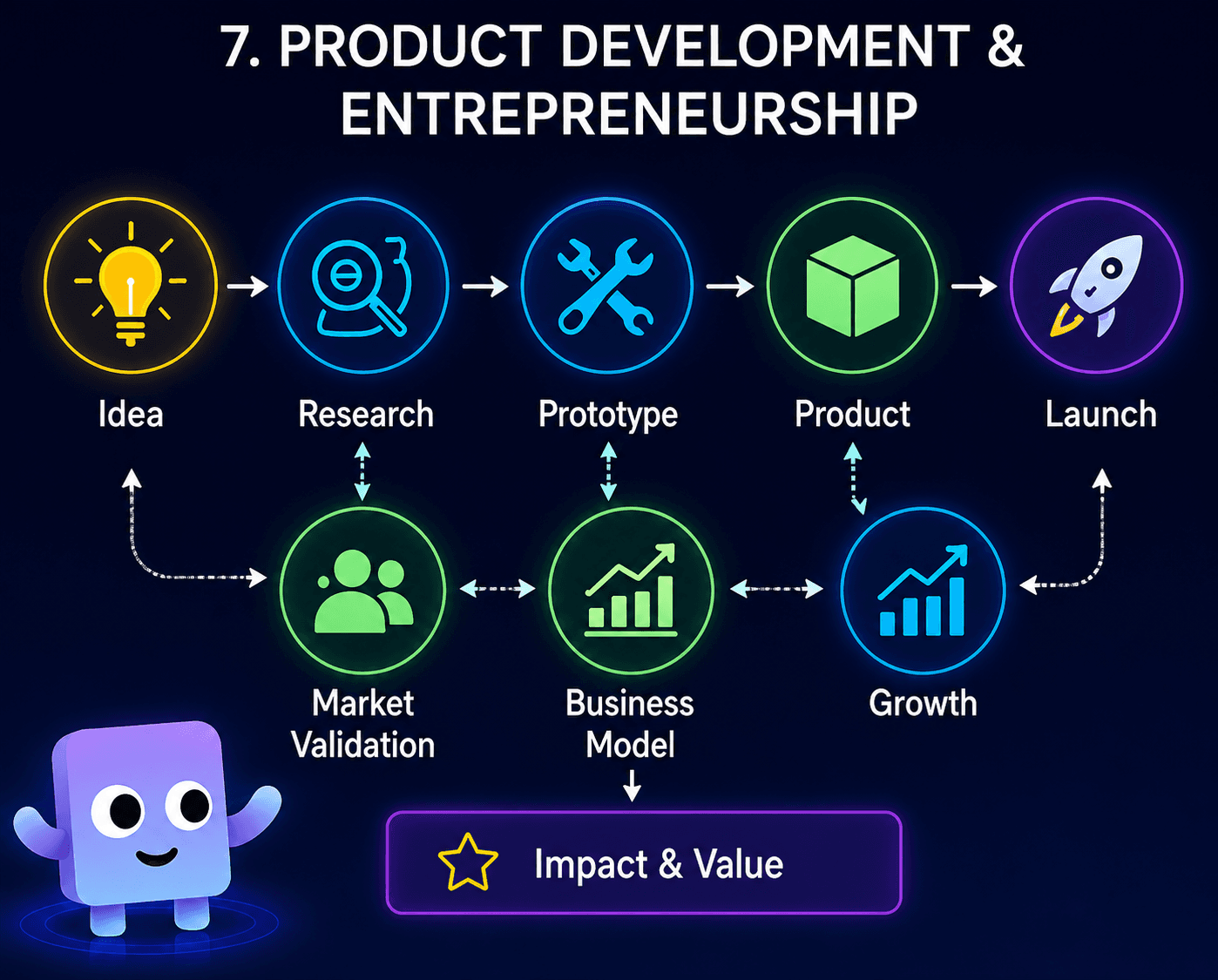
Entrepreneurship
Startup Building
Learn how ideas become successful products, startups, and technology companies.
Students develop an entrepreneurial mindset while learning how innovation creates real-world impact.
Topics
Projects
Students learn to think like founders, innovators, and future industry leaders.
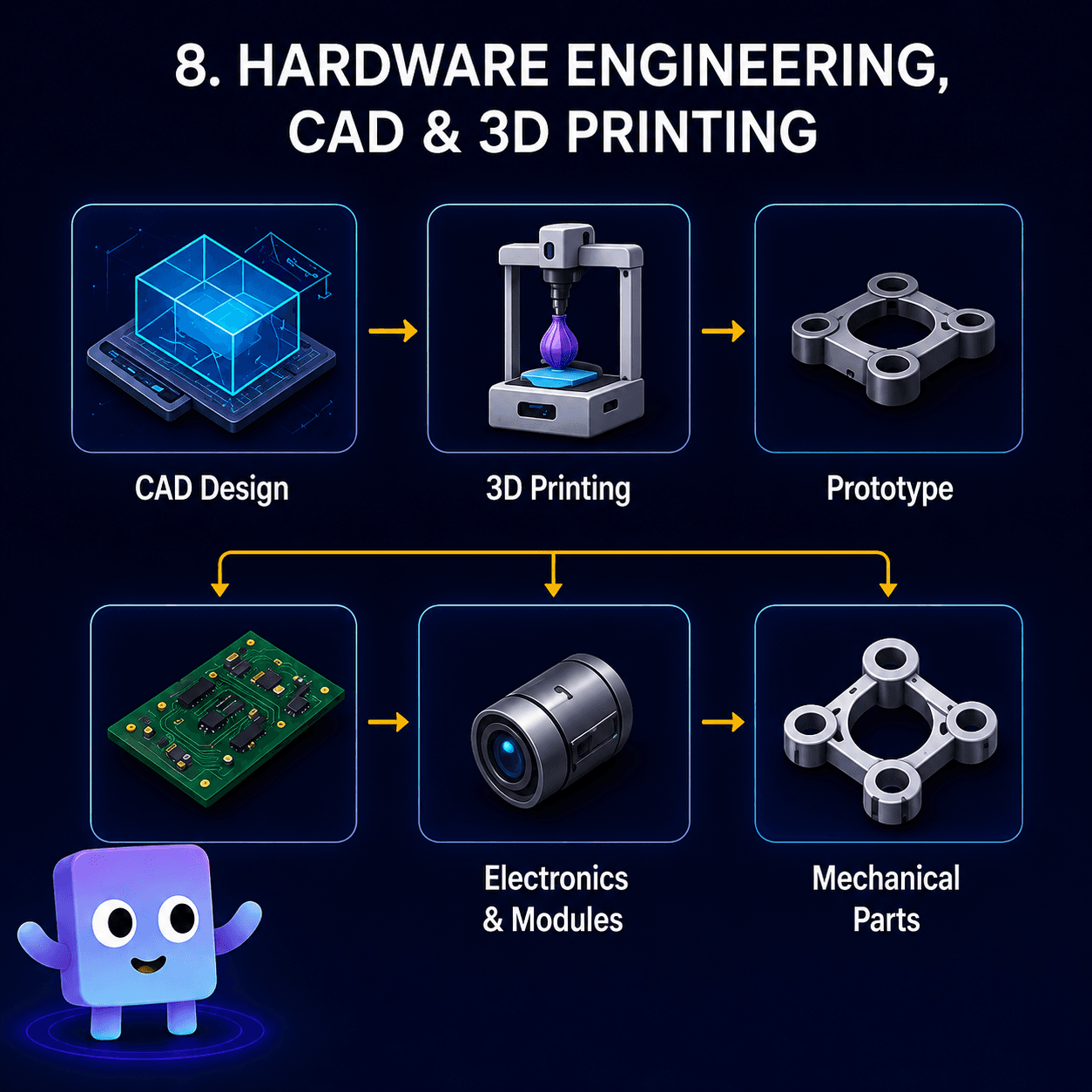
Hardware & Maker
Maker Engineering
Transform digital ideas into physical inventions.
Students design, prototype, and manufacture custom hardware and robotic components.
Topics
Projects
Students learn how engineering ideas become real-world products.
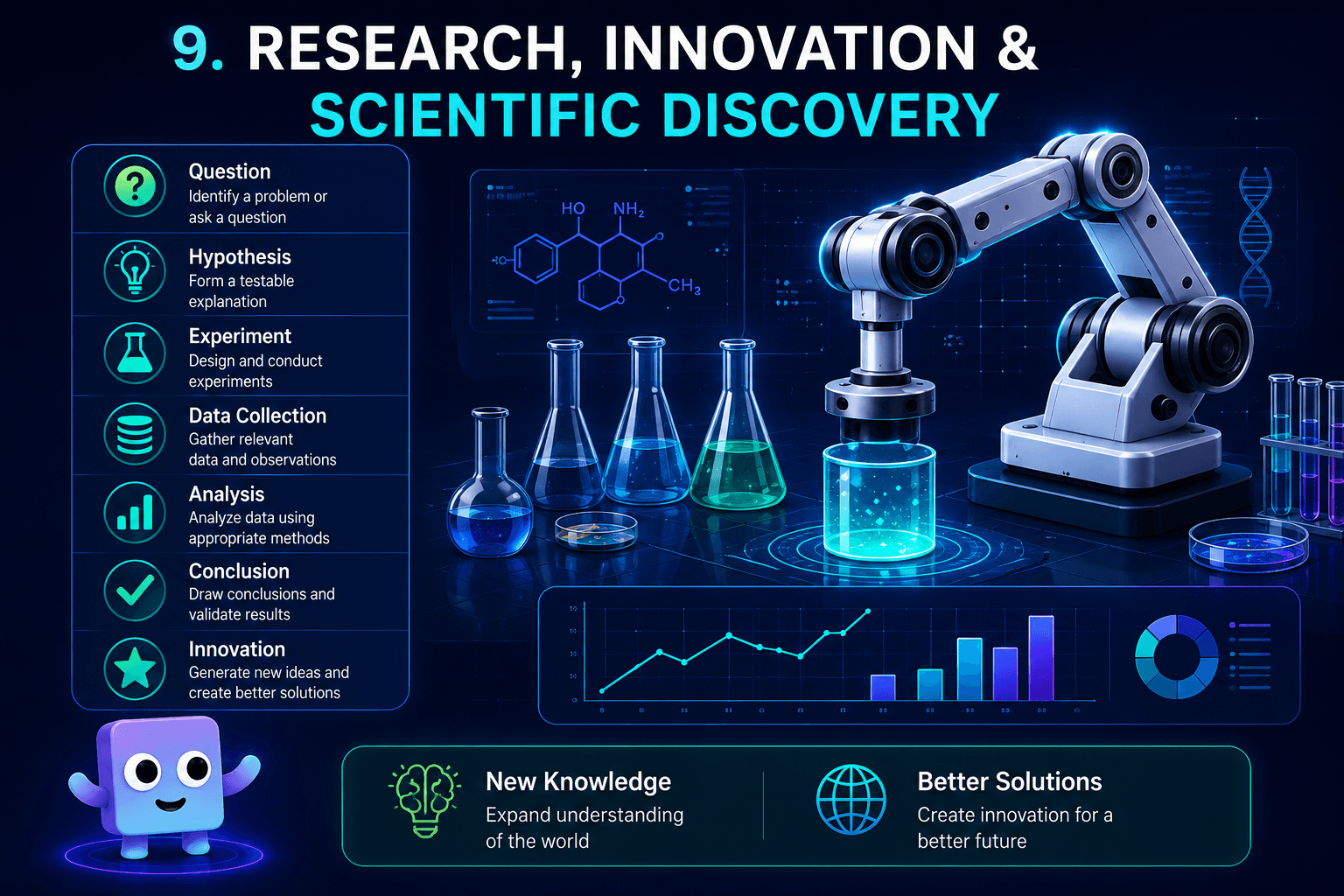
Research
Scientific Discovery
Develop the mindset and methodology used by scientists, researchers, and inventors.
Students learn how groundbreaking technologies are created, tested, and improved.
Topics
Projects
Students build critical thinking skills and learn how to generate new knowledge.
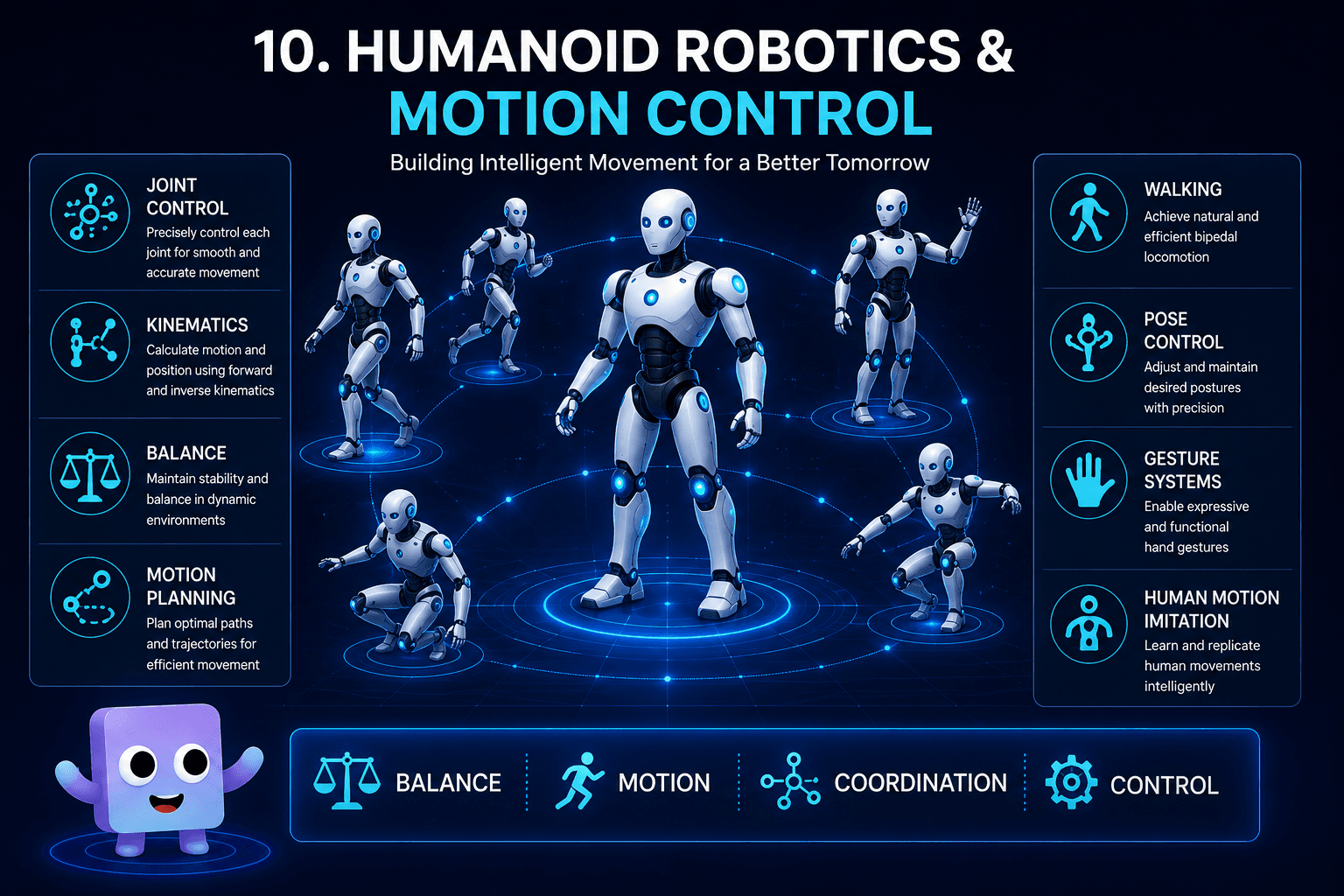
Humanoid Robotics
Motion Control
Learn how humanoid robots stand, walk, balance, gesture, and interact with the physical world.
Students explore the technologies that allow humanoid robots to perform human-like movements while maintaining stability, coordination, and control.
Topics
Projects
Students gain hands-on experience with the software and control systems that power the next generation of humanoid robots. By understanding how robots move, balance, and coordinate complex actions, students develop skills directly relevant to modern robotics research and industry applications.
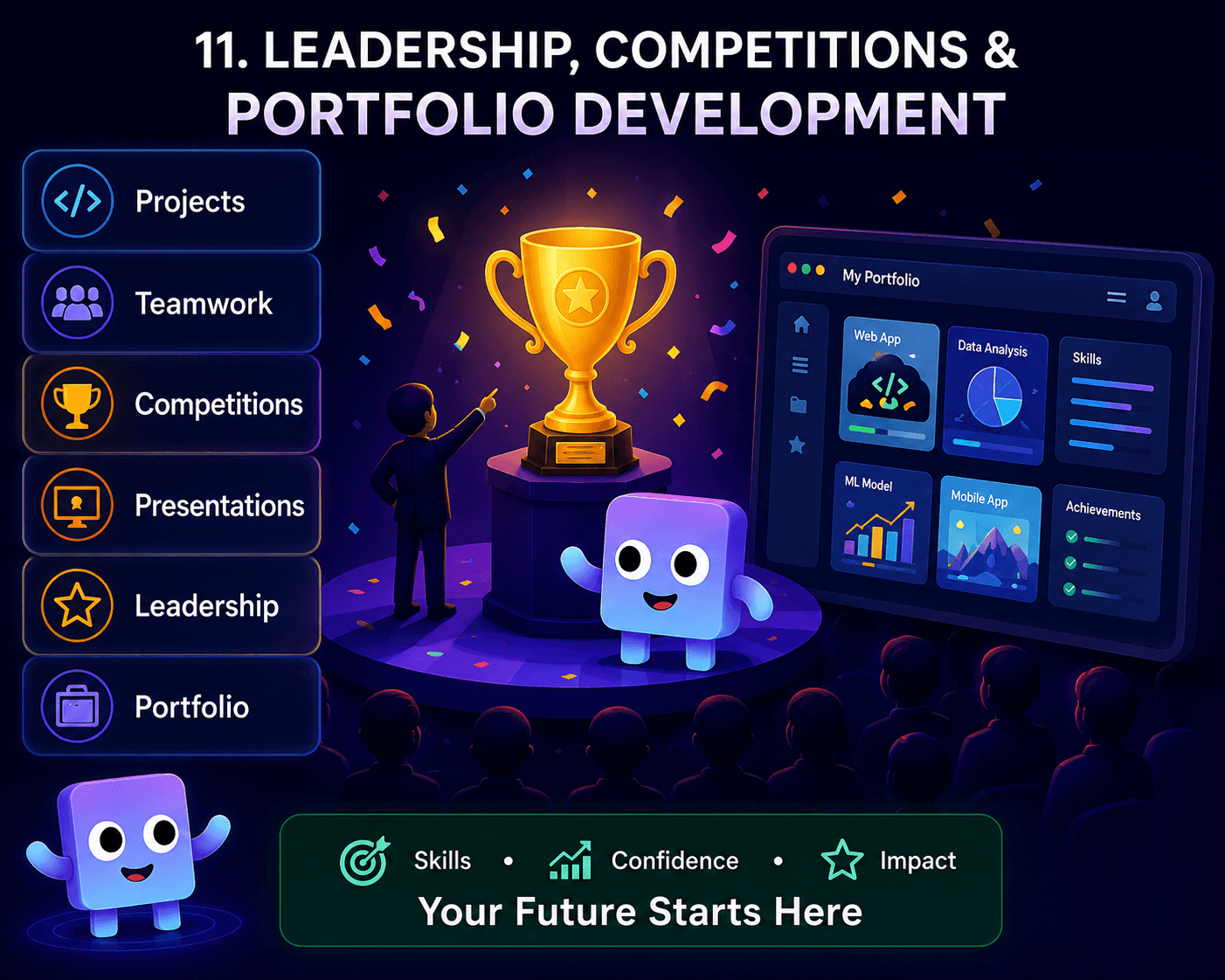
Leadership
Portfolio Development
Success in technology requires more than technical ability.
Students learn how to communicate ideas, lead teams, and showcase their accomplishments.
Topics
Projects
Every student graduates with a portfolio demonstrating their technical skills, leadership experience, innovation projects, and real-world accomplishments.
Engineering Documentation
Students continuously document designs, testing results, failures, improvements, and data analysis. Final outcomes may include materials that can be showcased for competitions, interviews, science showcases, and future academic opportunities.
Call to Action
Students progress through real engineering challenges every week, complete milestone-based achievements, and gradually build robotics projects that can be showcased, upgraded, and prepared for competition.